
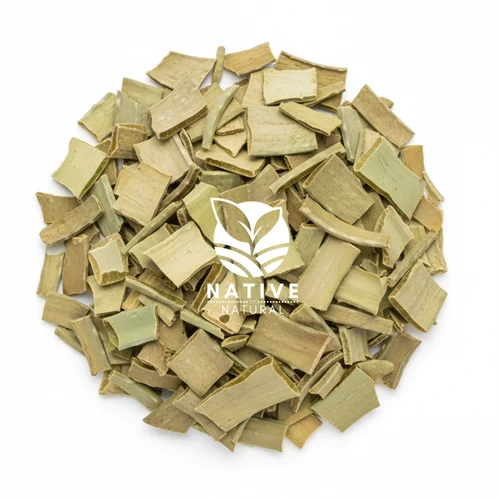
| Form | Dried Leaves |
| Packaging Size | 25 kg |
| Variety | Aloe barbadensis |
| Mucilage Content | High |
| Grade | A Grade |
| Color | Natural |
| Usage | Herbal Medicine, Juice Making, Extract Making, Cosmetics |
| Packaging Type | Bag |
| Botanical Name: | Aloe barbadensis Miller |
Native of Natural supplies Dry Aloe Vera Leaves (also known as Ghrit Kumari or Aloe barbadensis Miller). While fresh Aloe Vera is primarily known for its internal gel, the dried whole leaf or dried leaf skin is a valuable commodity in herbal processing, particularly for its compounds found in the outer leaf rind and latex layer.
We offer dried Aloe Vera leaves or leaf components that are carefully prepared to meet specific industry needs, whether for extraction, coarse cuts for infusion, or Ayurvedic raw material.
Types of Dry Aloe Vera Material
| Material Type | Description | Primary Use | Key Compound Focus |
| Dried Whole Leaf | The entire leaf (rind, gel, and latex) is dried and crushed/cut. This material is rich in the latex compounds. | Traditional Ayurvedic formulations, bulk herb processing, extraction of aloin. | Anthraquinones (Aloin) |
| Dried Leaf Rind/Skin | The outer green skin of the leaf, remaining after the inner gel has been removed. | Used for fibers, coarse cuts for tea/infusion blends, or as a source for polyphenols/antioxidants. | Polyphenols, Fibers |
| Coarse Cut (TBC) | The dried leaf skin cut into pieces (e.g., 10-40 mesh) suitable for herbal tea bags or larger decoctions. | Herbal tea blends, traditional preparations. | Infusion/Decoction |
Botanical & Technical Details
- Botanical Name: Aloe barbadensis Miller
- Common Name: Dried Aloe Leaf / Ghrit Kumari / Elwa (referring to the dried juice)
- Plant Part Used: Whole Leaf or Leaf Rind
- Processing Method: Cleaning, Slicing/Crushing, Dehydration (Sun-dried or Mechanical)
- Appearance: Hard, shriveled, dark green to brown or reddish-brown pieces/flakes.
- Grade: Herbal Grade / Processing Grade
- Key Components: Polysaccharides (in trace amounts), Anthraquinones (e.g., Aloin), Tannins, and Minerals.
- Packaging: Bulk sealed sacks or drums.
Processing Note: Aloin ContentThe yellow, bitter latex found between the leaf rind and the inner gel contains high levels of aloin (an anthraquinone). Products made from the whole leaf or unprocessed leaf skin will naturally contain higher levels of aloin, which is a known laxative. The dried leaf is primarily used in this form for traditional applications where the laxative property is desired, or as a raw material for industrial aloin extraction.
Applications in Various Industries
- Traditional Medicine: Raw material for formulations utilizing the full spectrum of leaf compounds.
- Herbal Teas: Coarse cut material is blended into cleansing or wellness teas (note: aloin content must be managed).
- Extract & Derivative Manufacturing: Used for the industrial extraction and purification of aloin (for pharmaceutical use) or other compounds.
Minimum Order & CustomizationWe supply dried Aloe Vera material based on your required grade and intended application. Please specify:
- Do you require the whole leaf or just the dried leaf rind/skin?
- What is the target aloin content (or level of decolorization) needed for your application?

Reviews
There are no reviews yet.